Effective treatment for gum disease, bleeding gums, and long-term oral health improvement — before it threatens the teeth themselves.
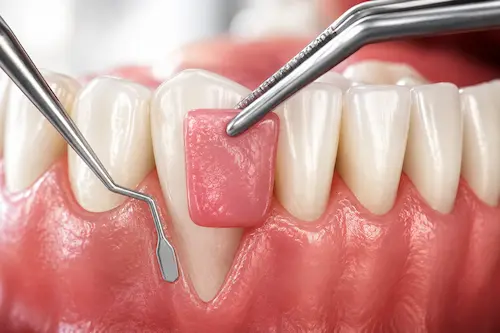
Gum disease usually starts quietly — slight bleeding when brushing, mild redness, occasional bad breath. Left untreated, it can progress from gingivitis to periodontitis, which damages the bone supporting your teeth and can eventually lead to tooth loss.
At Twins Dental Clinic, we treat gum disease at every stage — from a deep professional cleaning to more advanced periodontal therapy — with the goal of stopping the disease and rebuilding a healthy foundation for your teeth.
Removes plaque and tartar from below the gumline.
Targeted treatment to control bacterial infection in the gums.
Scheduled follow-ups to keep periodontitis from returning.
Reshaping uneven or receded gum lines for health and appearance.
Measuring gum pocket depth to grade disease severity.
Scaling and root planing under local anesthesia if needed.
Antibacterial treatment for infected pockets, if required.
Follow-up visits to monitor healing and prevent relapse.
Early gingivitis is fully reversible with treatment and good home care. More advanced periodontitis can be controlled and stabilised long-term, though it needs ongoing maintenance.
We use local anesthesia for deeper pockets, so the procedure itself is comfortable. Mild sensitivity for a day or two afterward is normal.
Bleeding usually means plaque has built up below the gumline, where a toothbrush can't reach. A professional deep clean is needed to remove it.